
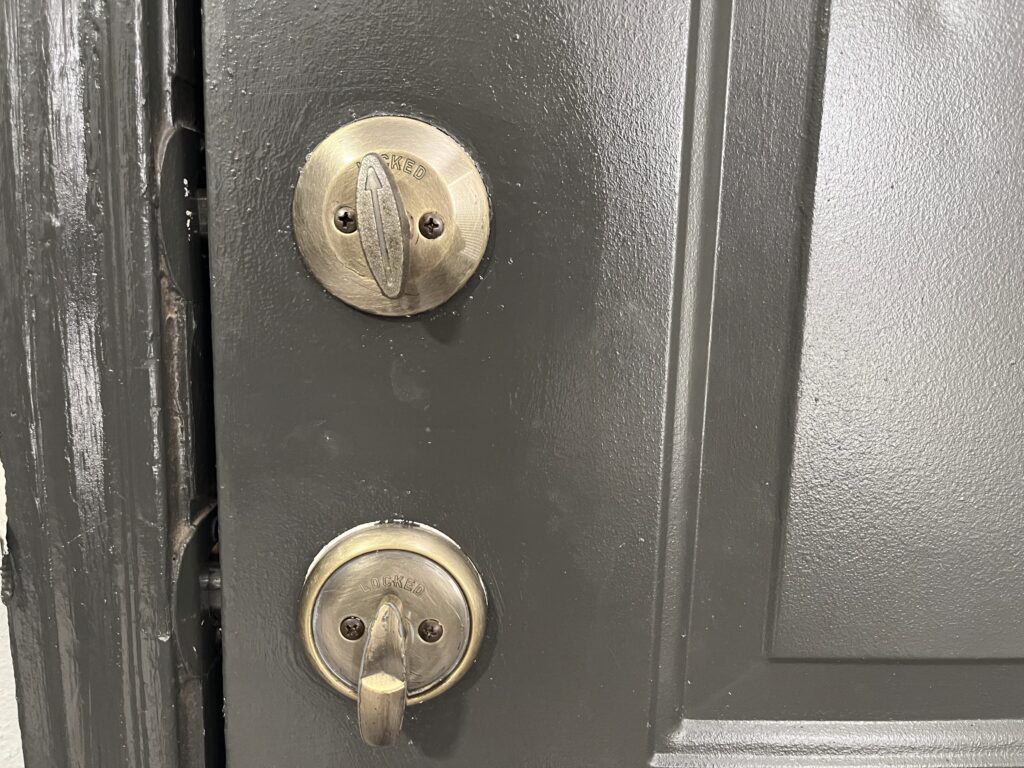
University Park is asking residents for feedback after postponing a project to remove the internal deadbolt locks from the UP units.
UP residents originally were notified via email on Oct. 17 that “all internal operated deadbolts will be removed from the UP apartment units. To ensure that emergency and maintenance personnel can always respond promptly when needed.” According to the email, the facilities team would begin removing the secondary deadbolt lock from each apartment in the following week.
However, on Oct. 20, residents received another up email, which said “the project has been postponed and will, at the earliest, be implemented in the Spring 2026 semester.”
Shannon Kaczmarek, dean of community living and wellness, said the discussion of removing the internal locks has arisen in recent years. While the doors are equipped with two locks, the internal lock is accessible only from the inside. So in an emergency, first responders would need to break down the door or make contact with the residents to get access to the apartment.
“Part of the reason we were considering that change was because it would align with the way that we do the rest of our housing on campus, because of the need to, at times, be able to access those spaces for facility needs or responding to students or well-check visits that occasionally come up.”
Kaczmarek said the project to remove the locks was postponed so the university could get insight from other Texas universities and better understand the pros and cons. She said the Office of Residence Life is aware that some people are uncomfortable with the removal of the locks.
“We just want to be very mindful of the decision that we’re making,” Kaczmarek said. “The decision is intended to improve the space and respond quickly to students’ needs, and to be able to enhance the residential experience, but not decrease the students’ feeling of safety.”
UP resident Kate Born said she spoke with friends who had safety concerns regarding the lock removal.
“I was talking with some female friends who also live in UP,” said Born, senior finance major from Grapevine, “and they were concerned, if they didn’t have a lock where no one could come in, they would just have some safety issues. I don’t know if things have happened the past, or if they were just concerned in general.”
Born said on the other hand, she is not concerned about safety because she never uses the internal lock.
“I think I either way, I’m fine,” Born said. “If somebody has the key, then they’re supposed to. And I trust the guys who work at UP. They’re really hardworking, and I don’t think I’m worried about safety issues.”
Kaczmarek said while there is a security system installed on the property and ACUPD patrols the campus, they understand that some students just feel more secure with an additional lock. She said the university is listening to feedback from students, and considering alternative options.
“We have talked about going away from the internal deadbolt lock and putting in place mobile ID access into the front doors of those units,” Kaczmarek said. “It’s a very, very costly solution, and so it’s hard, it’s a hard one to jump to first right off the bat, but it’s another possible way to add an additional locking feature to those doors, so that you have both the physical and the mobile ID access.”
“We just want to be able to have some conversations with some other peer institutions who are similar to ACU, who have done something similar, or they have that model in place, where they have on-campus apartments, but they don’t have that tenant lock, that internal one-sided deadbolt.”
If the university implements the removal plan, Kaczmarek said, at the earliest, it would start in the spring semester. For students who have already signed up to live there in the spring semester and are uncomfortable, UP would honor those preferences.
When the new housing selection process launches in the spring, Kaczmarek said students will be aware of the changes and have the choice to live off campus.
“The hope is that people do not feel like this is something that is being done to them and sprung on them as a surprise,” Kaczmarek said, “but something that is taking into consideration the feelings and the need for safety that students perceive and is honoring that.”
