
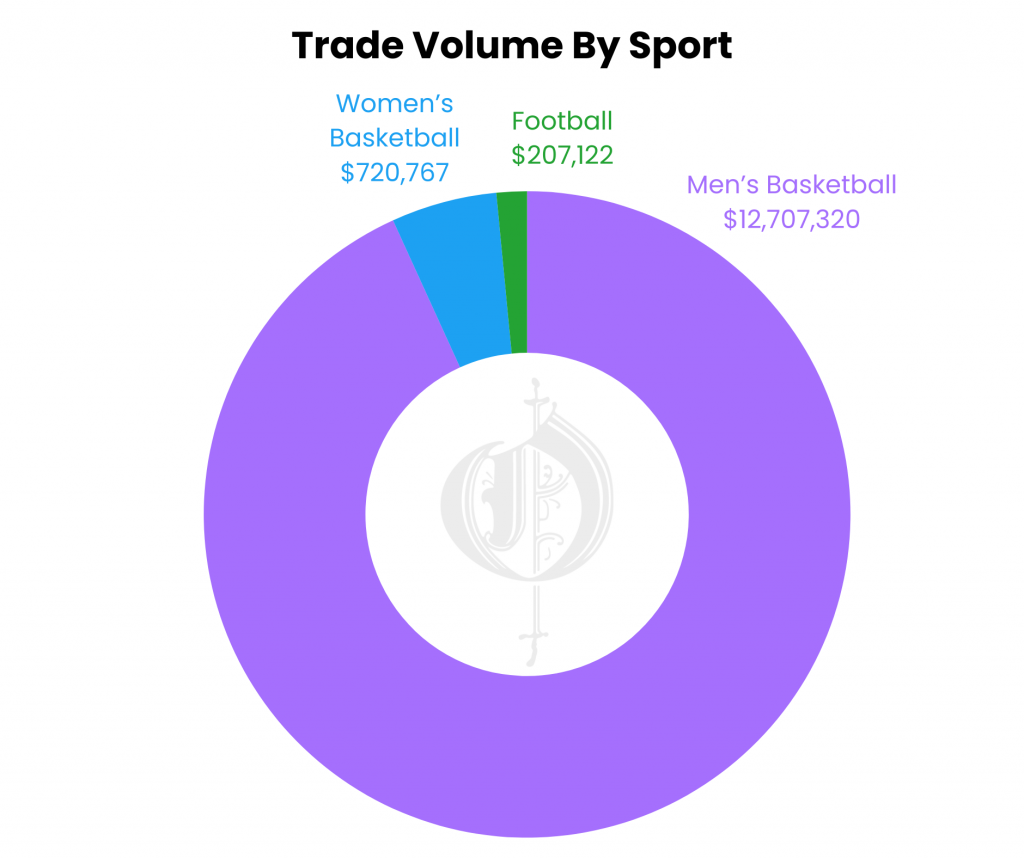
Prediction markets are quietly reshaping college athletics. As of Feb. 27, contracts tied to university games generated $13,642,070 in trading activity across the two most popular prediction market platforms. Not point spreads. Not parlays. Financial contracts are tied directly to the outcomes of Wildcat games.
Prediction markets, such as Polymarket and Kalshi, are relatively new, both having been created in the last eight years.
Polymarket is a crypto-based prediction market where users buy and sell shares in event outcomes. If a trader believes ACU will beat Southern Utah, they can buy a contract that pays out if it does. Each share resolves to either $1 or $0, depending on the result. It resembles stock trading more than traditional sports betting.
Kalshi operates differently. The Commodity Futures Trading Commission regulates it, and Kalshi markets itself as a legal exchange for event contracts. Users trade contracts tied to everything from inflation rates to election outcomes. In recent years, sports contracts have become a growing part of that ecosystem.
The branding is important, though. These platforms call it trading, not gambling. But when money is tied to whether a college athlete makes a shot or wins a game, the distinction starts to blur.
Data collected on Feb.27 shows how embedded these markets already are. More than 20 men’s and women’s basketball games appeared on Polymarket this season, with more than 36 on Kalshi. Several men’s basketball matchups generated six-figure trading volumes.
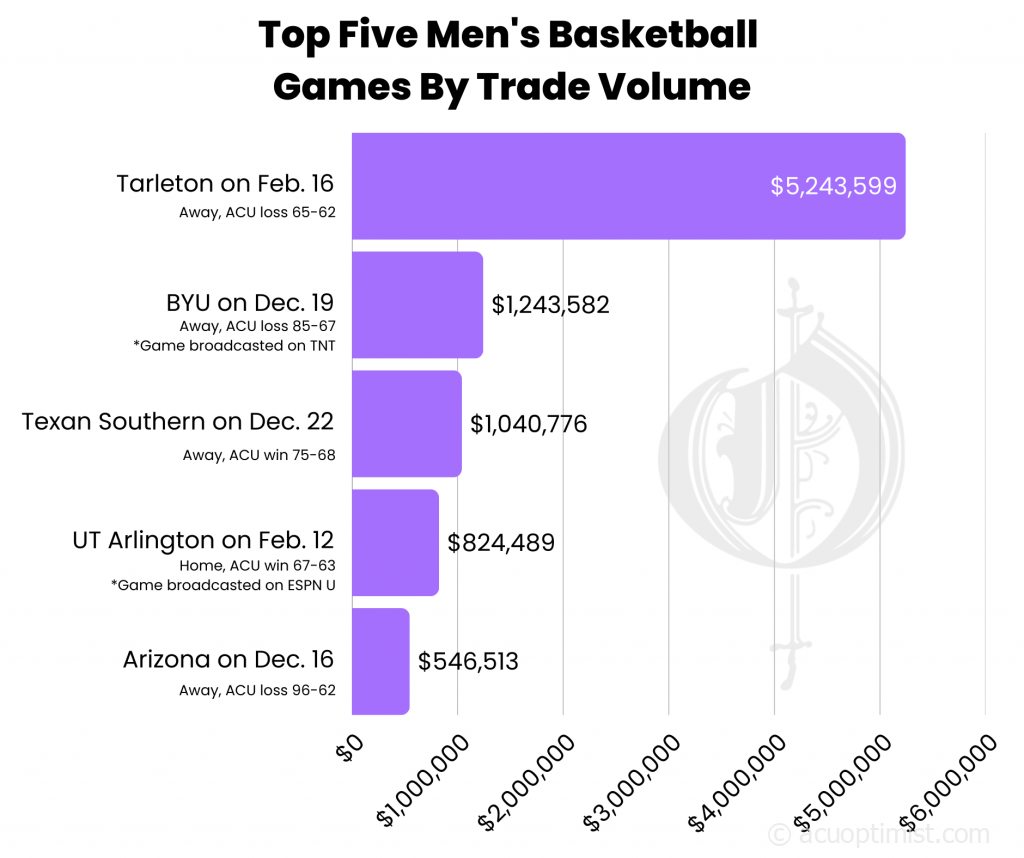
These were regular-season conference games. Not March Madness. Not a national spotlight.
The platforms sell contracts for the university’s football, baseball and women’s basketball games as well, though most recorded significantly lower volumes.
This raises an uncomfortable question: Who is trading these contracts?
Prediction markets appeal to college students because they feel accessible and analytical. Setting up an account can take minutes, sometimes with little verification needed. Polymarket requires cryptocurrency, while Kalshi functions more like an online brokerage. For students who are comfortable with fintech apps like Robinhood, the interface feels familiar.
Legally, the landscape is complicated. Kalshi operates under federal commodities regulation. Polymarket has faced federal scrutiny, including a 2022 settlement with the CFTC over unregistered event-based contracts. Sports betting laws are typically governed at the state level, but prediction markets rely on federal financial regulation instead.
The NCAA prohibits all sports wagering. Its rule book states, “NCAA rules ban participation in sports betting activities and prohibit providing information to individuals involved in or associated with any type of sports betting activities concerning intercollegiate, amateur or professional athletics competition.”
That includes betting on other schools. Compliance offices would likely view trading a sports event contract as wagering under NCAA rules. Because Texas does not have fully legalized statewide online sports betting, federally regulated contracts tied to college sports create additional complexity.
College athletics has already seen how gambling pressures can affect integrity. In 2023, the University of Alabama baseball program was linked to suspicious betting activity involving inside information. Iowa and Iowa State athletes have faced charges connected to online wagering violations. In response to the rise of prediction markets, the NCAA has urged lawmakers to suspend prediction markets entirely across sanctioned sports.
The university’s student-athlete handbook addresses gambling directly. It states that “participating in any form of sports wagering, including placing, accepting or soliciting bets on any youth, intercollegiate, amateur or professional sporting event, is strictly prohibited.”
The listed consequences include a one-year suspension, loss of a season of eligibility, potential loss of scholarship, expulsion and permanent ineligibility to compete at ACU. The handbook’s NIL section also prohibits student-athletes from endorsing or entering into compensation agreements connected to sports betting.
While prediction markets frame their activity as financial trading, if interpreted as sports wagering under NCAA or university policy, participation could carry serious consequences for athletes.
Beyond legality, a cultural shift is underway. College athletes, many not on full scholarships and still juggling academics, now perform in a landscape where their box score affects not just fans but financial markets. Hundreds of thousands of dollars can trade hands based on a single conference game.
The normalization may be the most important part. No flashy campus ads are promoting these markets. No stadium sponsorships. Just quiet digital contracts moving money in the background.
Because prediction markets position themselves as financial tools, they have largely avoided the intense scrutiny aimed at sportsbooks like DraftKings or FanDuel. Yet the economic reality looks similar. Money rides on unpaid college athletes.
The money is already there. The markets are live. And on campuses like ACU, the conversation has barely begun.